Ahmedabad: Cricket history witnessed a defining moment on March 8, 2026, when the India national cricket team successfully defended their title in the ICC Men’s T20 World Cup 2026 with a commanding 96-run victory over the New Zealand national cricket team at the iconic Narendra Modi Stadium in Ahmedabad.
The emphatic triumph secured India their third T20 World Cup crown and made them the first team in the tournament’s history to retain the title successfully. Even more significantly, it marked the first time a host nation lifted the T20 World Cup trophy on home soil, triggering celebrations across the cricket-loving nation.
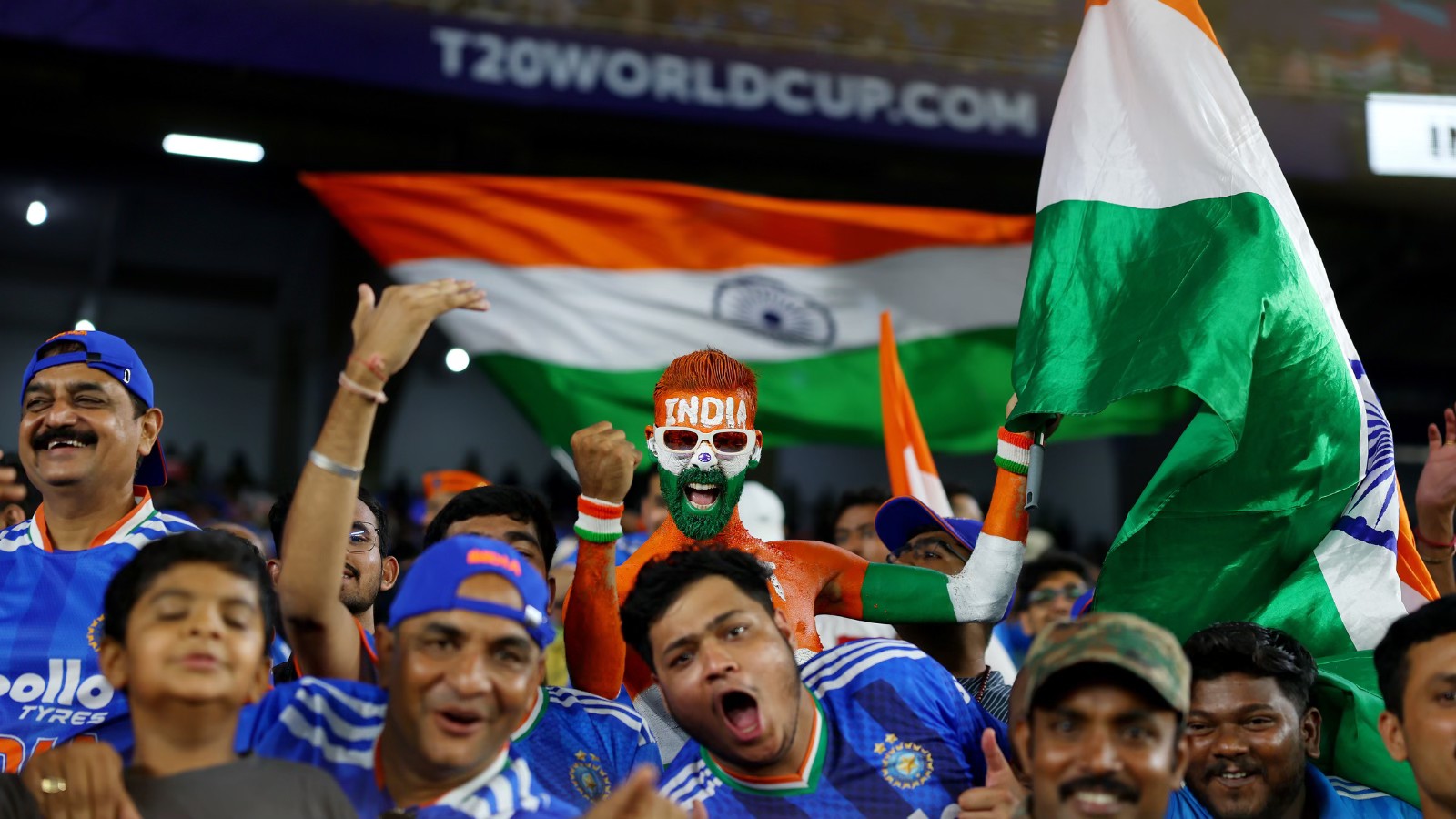
The final unfolded in front of a packed stadium of over 130,000 spectators, with the stands transformed into a sea of blue as fans witnessed one of the most dominant performances in a World Cup final.
A Tournament of Global Scale
Co-hosted by India and Sri Lanka, the 2026 T20 World Cup ran from February 7 to March 8 and featured 20 teams competing across eight venues. Matches were played in Ahmedabad, Chennai, Delhi, Kolkata and Mumbai in India, while Sri Lanka hosted games in Colombo and Kandy.
Across 55 matches, the tournament delivered thrilling contests, record-breaking performances and dramatic finishes. Yet from the very beginning, the spotlight remained firmly on defending champions India, led by captain Rohit Sharma.
The Indian squad represented a perfect blend of experience and youthful aggression. Veterans such as Suryakumar Yadav and pace spearhead Jasprit Bumrah provided stability, while emerging stars like Sanju Samson, Ishan Kishan and Abhishek Sharma injected fearless energy into the team’s aggressive brand of T20 cricket.
Dominance in the Group Stage
India entered the tournament as favorites and quickly justified the expectations. Placed in Group A alongside the Pakistan national cricket team, United States national cricket team, Netherlands national cricket team and Namibia national cricket team, India produced a flawless campaign.
The tournament opener at Mumbai’s Wankhede Stadium saw India defeat the United States by 29 runs after Suryakumar Yadav scored a brilliant unbeaten 84. Strong bowling from Bumrah and Arshdeep Singh ensured a comfortable victory.
India followed it up with a dominant win against Namibia in Delhi. Kishan’s explosive 61 powered India to 209 for 9, while spinner Kuldeep Yadav dismantled the opposition with four wickets.
One of the most anticipated matches came against Pakistan in Colombo. India delivered a commanding performance as Kishan smashed 77 and the pace attack led by Bumrah and Mohammed Siraj bundled Pakistan out for 114.
India sealed their group stage dominance with a victory over the Netherlands in Ahmedabad, finishing unbeaten and advancing confidently to the Super 8 stage.
Super 8s: A Wake-Up Call
The Super 8 stage brought tougher challenges. India were grouped with the South Africa national cricket team, Zimbabwe national cricket team and West Indies cricket team.
Their first match against South Africa proved to be the only setback of the campaign. Led by Aiden Markram, South Africa posted a challenging total of 188 and restricted India to 111, handing the hosts their only defeat of the tournament.
The loss, however, proved to be a turning point.
India bounced back emphatically against Zimbabwe in Chennai, piling up a massive 256 for 4 — one of the highest totals in T20 World Cup history. Contributions across the batting lineup overwhelmed the opposition.
The decisive Super 8 clash against West Indies at Eden Gardens turned into a thrilling contest. West Indies posted 195 for 4, powered by a brilliant 72 from Nicholas Pooran.
India’s chase was anchored by a sensational unbeaten 97 from Sanju Samson, who guided the team to victory with four balls remaining and secured a semifinal berth.
Semifinal Run-Fest Against England
India’s semifinal clash against the England cricket team at Wankhede Stadium produced one of the most dramatic matches in T20 World Cup history.
Batting first, India unleashed a batting storm to post 253 for 7 — the highest total in a T20 World Cup knockout match. Samson once again led the charge with a stunning 89, while all-rounder Hardik Pandya added vital late runs.
England responded with remarkable aggression. Young batter Jacob Bethell scored a spectacular 105 off just 48 balls, nearly pulling off a historic chase.
But India’s experienced bowling unit held its nerve. Bumrah’s precision at the death and crucial wickets from Pandya restricted England to 246 for 7, giving India a tense seven-run victory in a match that produced a record aggregate of 499 runs.
The Grand Finale: India vs New Zealand
The final at the Narendra Modi Stadium was billed as a blockbuster encounter between two of the most consistent teams in world cricket.

New Zealand entered the match with momentum after a dramatic semifinal victory over South Africa, highlighted by a record-breaking century from Finn Allen.
However, the final belonged entirely to India.
After being asked to bat first, India launched into a breathtaking assault. Abhishek Sharma smashed the fastest half-century in a T20 World Cup knockout match, reaching his fifty in just 18 balls.
Kishan complemented him with elegant yet destructive strokeplay, reaching a rapid 50 off 23 deliveries.
Yet the star of the night was Sanju Samson. Continuing his extraordinary late-tournament form, Samson delivered another masterclass, scoring 89 in consecutive matches and guiding India to a monumental 255 for 5 — the highest total ever recorded in a T20 World Cup final.
New Zealand briefly found hope when all-rounder James Neesham struck three wickets in quick succession. However, late fireworks from Shivam Dube ensured India finished with a daunting total.
Bumrah’s Decisive Spell
New Zealand’s chase began aggressively, with early boundaries from Tim Seifert raising hopes of a competitive contest.
But once Jasprit Bumrah entered the attack, the match swung decisively.
Using his trademark dipping off-cutters and pinpoint accuracy, Bumrah dismantled the New Zealand batting lineup, finishing with remarkable figures of 4 for 15.
Despite resistance from captain Mitchell Santner and contributions from Daryl Mitchell, New Zealand never truly recovered.
They were eventually bowled out for 159, sealing India’s emphatic 96-run victory.
Stars of the Tournament
Sanju Samson emerged as the standout performer of the tournament, scoring over 400 runs and earning the Player of the Tournament award. His match-winning innings against West Indies, England and New Zealand defined India’s campaign.
Ishan Kishan provided explosive starts at the top, while Suryakumar Yadav contributed consistently with his innovative strokeplay.
With the ball, Jasprit Bumrah was exceptional, finishing as India’s leading wicket-taker with 21 wickets and delivering match-winning spells at crucial moments.
Kuldeep Yadav thrived in subcontinental conditions, while Hardik Pandya’s all-round contributions added depth and balance to the team.
A Legacy Cemented
India’s triumph extended their winning streak in the tournament to an extraordinary 17 matches and further cemented their dominance in global white-ball cricket.
For Rohit Sharma, the victory marked a defining moment in his leadership journey, as he successfully guided India to consecutive T20 World Cup titles.
As fireworks illuminated the Ahmedabad skyline and celebrations erupted across the country, the 2026 T20 World Cup became more than just another trophy.
It became a statement.
By defending their title and lifting the trophy on home soil, India not only conquered the tournament but also created a legacy that will inspire generations of cricketers to come.